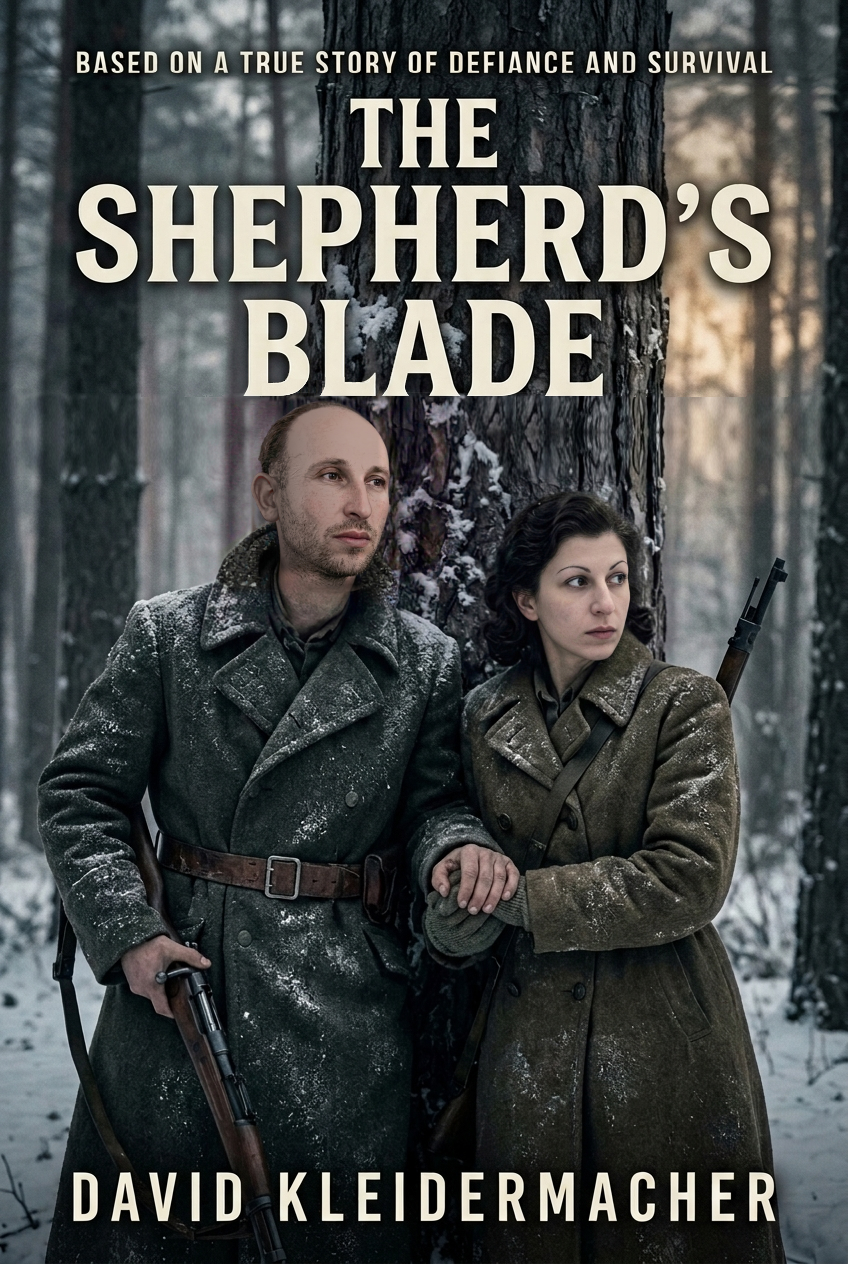
Three Nazi camps. Three escapes. Based on the true wartime story of the author’s grandparents, The Shepherd’s Blade is a World War II thriller of courage, devotion, and the fight to endure.
Inspired by the wartime survival and partisan resistance of Herschel and Ida in occupied Poland.
In Warsaw in August 1939, twenty-two-year-old Herschel Skolnik is a watchmaker’s apprentice, a rare Jewish captain in the Polish army, and a man with an unusual skill: pressing two blades of grass between his thumbs and blowing through them to mimic the call of a mistle thrush. When the German invasion shatters Poland’s defenses, Herschel strips his captain’s insignia to march into captivity as a sergeant, a gamble that buys his release from a German prisoner-of-war camp.
Returning to occupied Warsaw, he leads a unit of forest partisans who use his grass-blade birdsongs as battlefield signals to ambush German patrols. In the woods outside the city, he meets Ida, a resistance nurse who fights beside him as the walls of the Warsaw Ghetto close around their people and his family hides on a country farm.
As the Nazi grip tightens, their fight for survival spans a midnight partisan raid on a Treblinka-bound death train, the interrogation cells of a Gestapo prison, and the barracks of Auschwitz, where a hollow marsh reed in a camp cesspit becomes Herschel’s only chance at escape. Separated by war and captivity, Herschel and Ida risk everything to find each other again, settle a blood debt with the SS officer who murdered his family, and cross the winter Alps toward freedom.
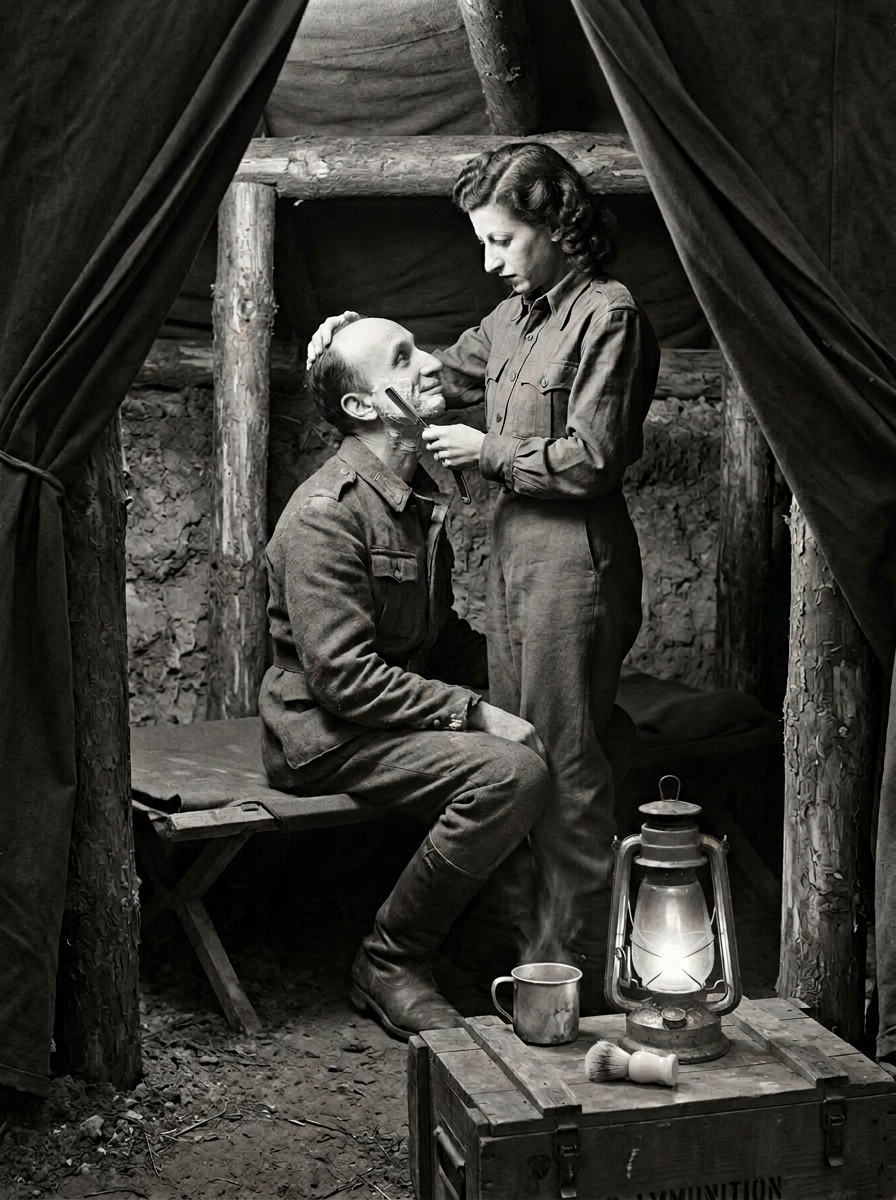
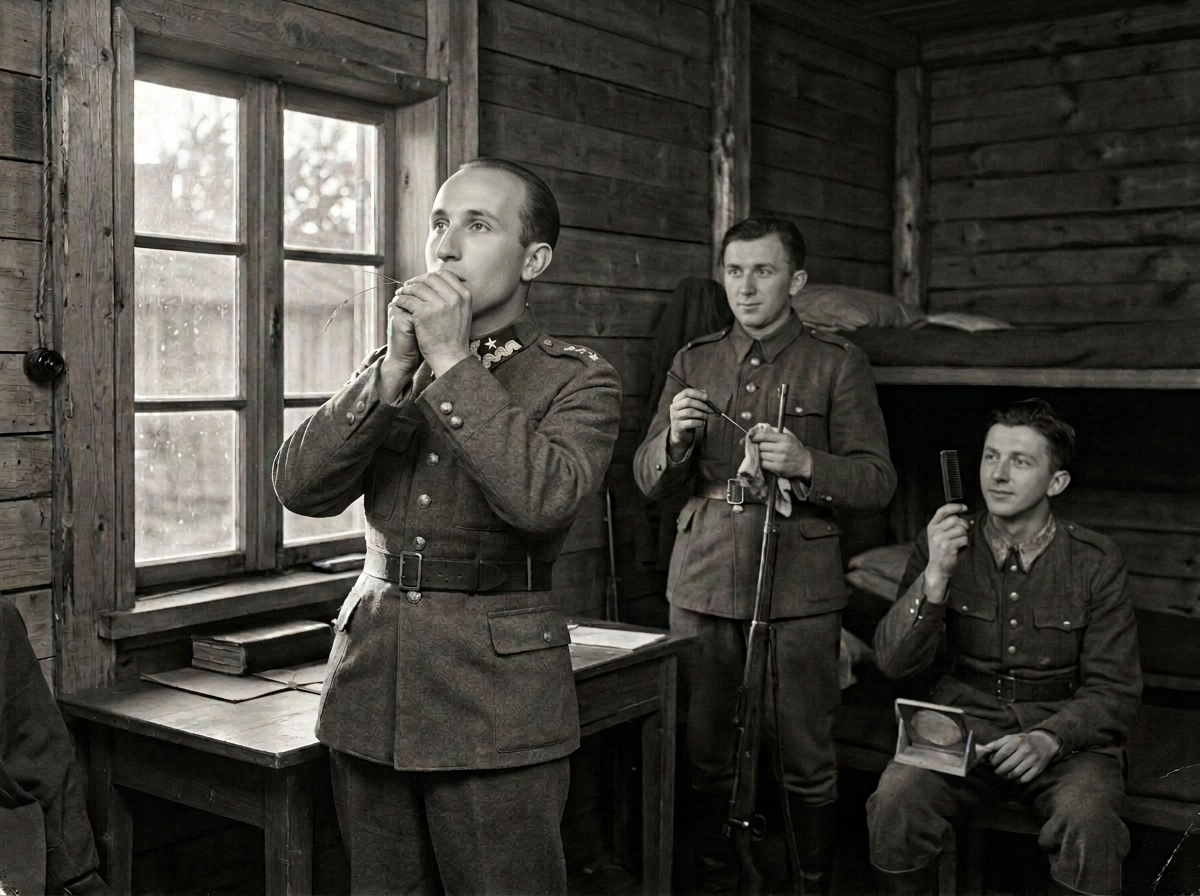
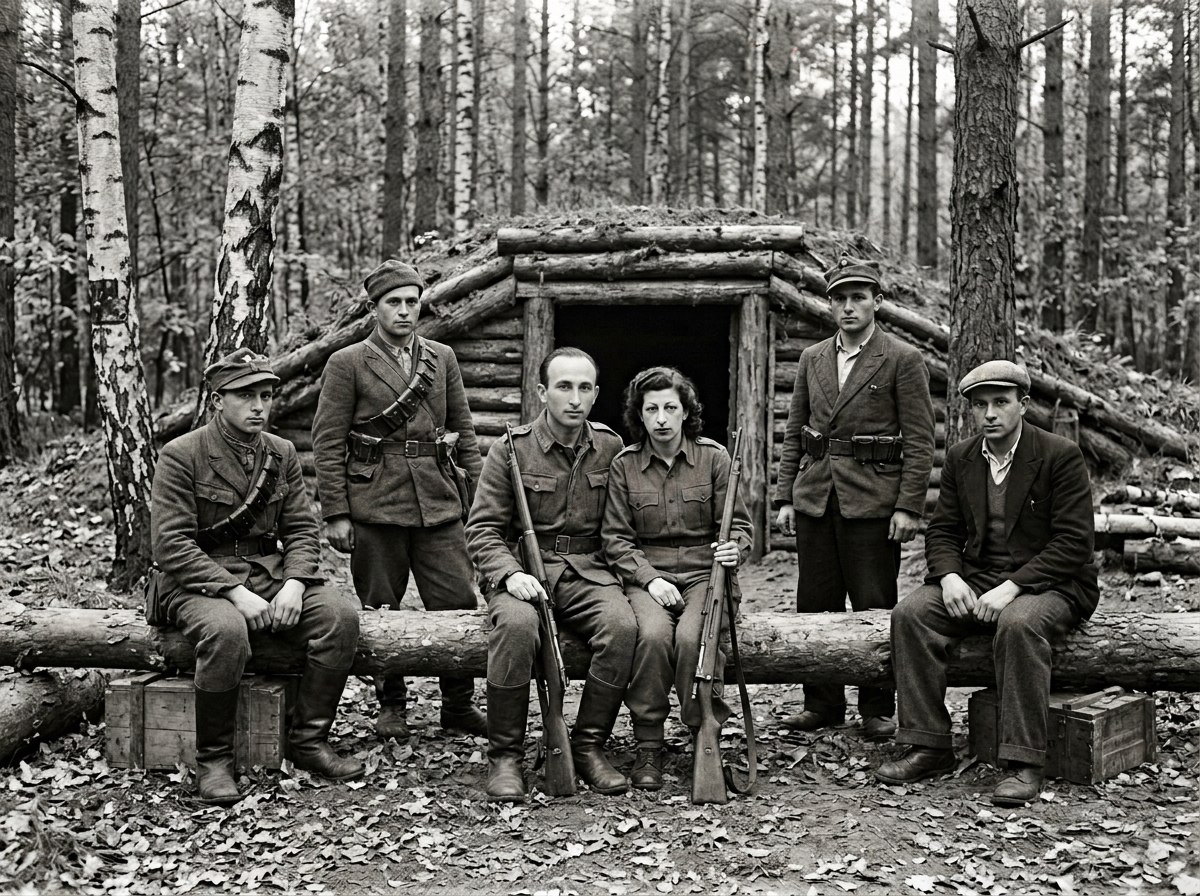
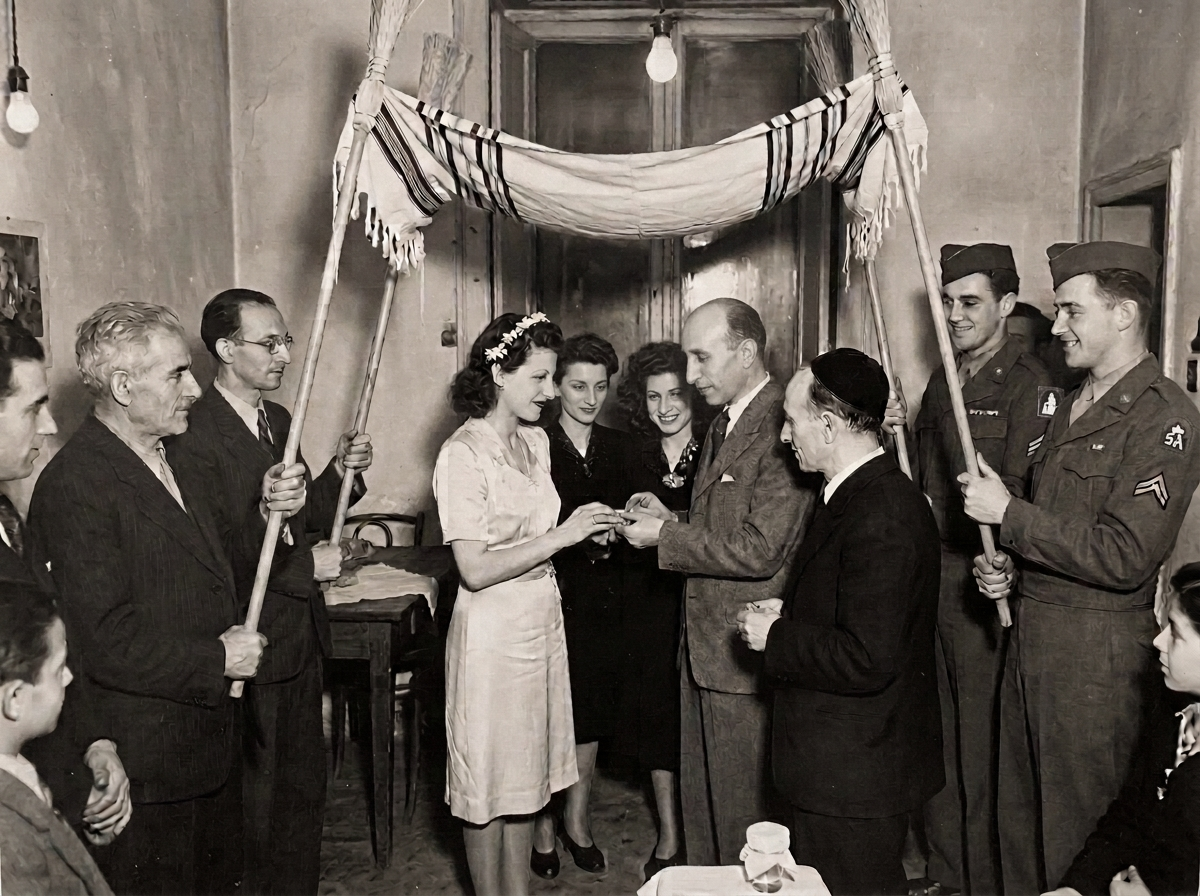
To accompany the text of the novel, The Shepherd’s Blade includes historical illustrations generated from surviving 1940s family photographs through the author’s Generative Biographical Illustration (GBI) method, preserving the real physical likenesses of Herschel and Ida across key moments of their wartime journey.
Inside a snowbound partisan tent outside Warsaw, resistance nurse Ida shaves Herschel before a winter mission. Anchored to surviving wartime portraits of the author’s grandparents, the scene captures the quiet intimacy and devotion that sustained them through four years of war.
Before the German invasion, Polish Army Captain Herschel demonstrates how two blades of grass pressed between his thumbs can mimic the call of a mistle thrush.
Operating from hidden dugouts in the Kampinos wilderness, Herschel’s partisan unit uses birdsong signals to coordinate ambushes on German supply convoys.
After surviving captivity and crossing the Alps into liberated Italy, Herschel and Ida marry beneath a chuppah in Allied-occupied Naples.
Herschel survived three Nazi camps, fought as a forest partisan, and rebuilt a life from the ashes of occupied Poland, only to face the quiet theft of memory in his final years before passing away from Alzheimer’s disease in 1996.
To honor his life and help protect the memories of future generations, 100% of the author’s profits from The Shepherd’s Blade are donated to the Cure Alzheimer’s Fund, where 100% of general donations go directly to laboratory research.